The sparkling efficiency of Heat Pump Water Heaters
We’ve come out with transformative technology for heating the water we use each day. But we haven’t adopted it like we should (yet). Upgrading to a Heat Pump Water Heater (HPWH) is a no-brainer decision as a homeowner – here’s why:
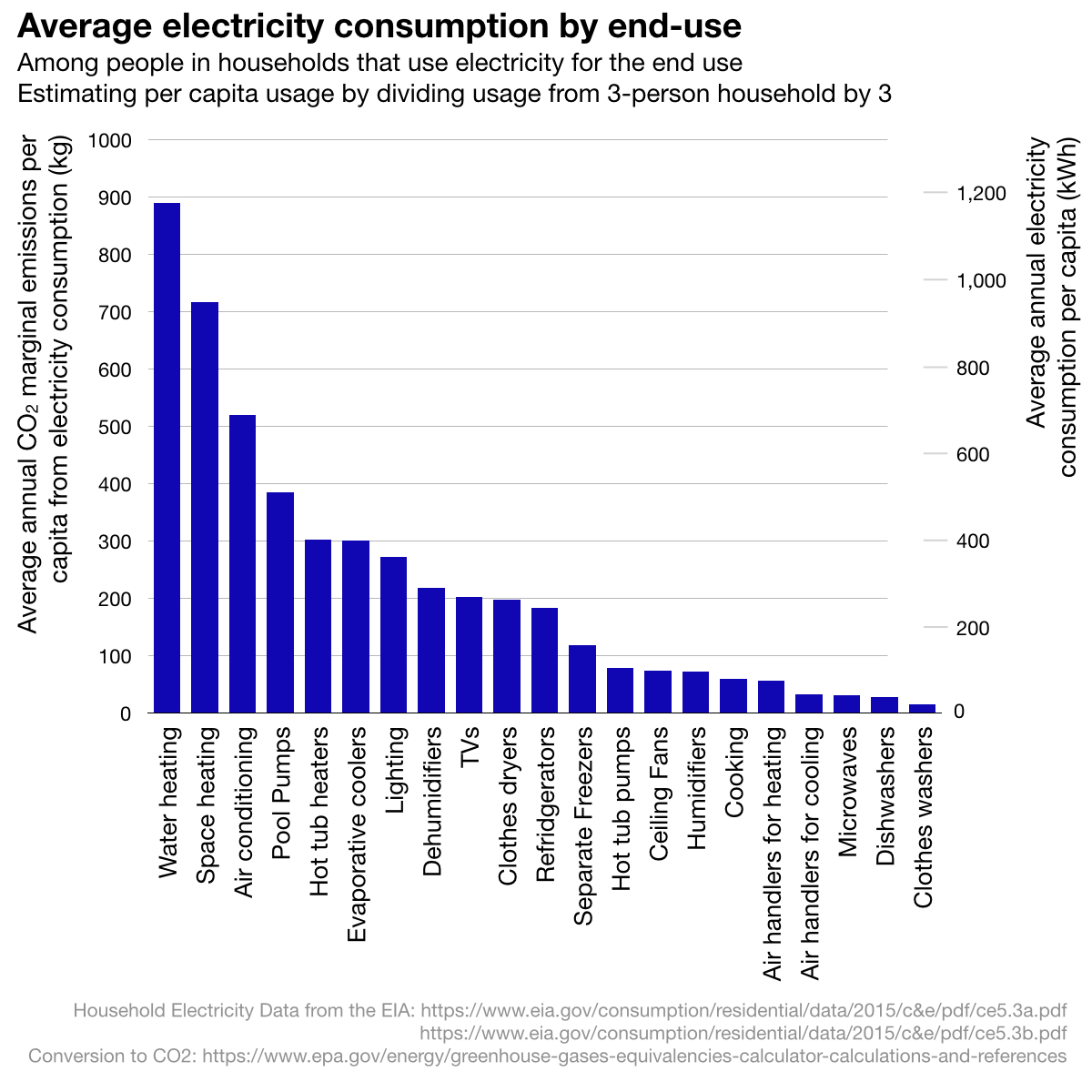
Water heating is the #1 way we use electricity in the home
Water heating accounts for about 18% of the electricity used by a typical home – and that figure increases in households with more people.
Heat Pumps are Energy Efficient
Heat pump water heaters are about 3 times more efficient than traditional water heating systems. They work like your refrigerator, but in reverse – instead of taking heat from inside the fridge and moving it out, they move heat from the air into the water. Conventional systems work by creating heat from scratch – it turns out moving heat around is a lot more efficient than creating it outright.
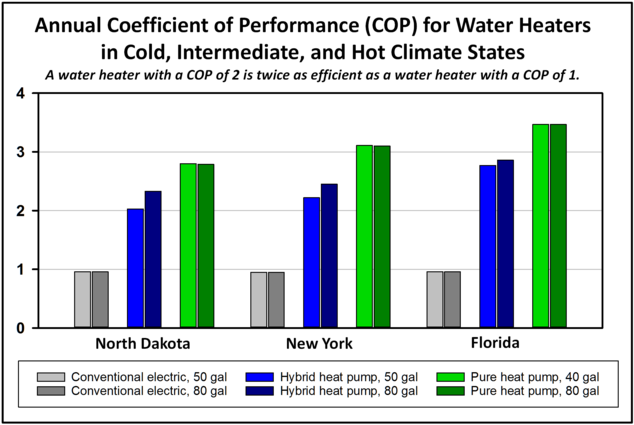
Today, heat pumps work well in all climates – they maintain their excellent efficiency even in places as cold as North Dakota.
Upgrading is ROI positive on day 1
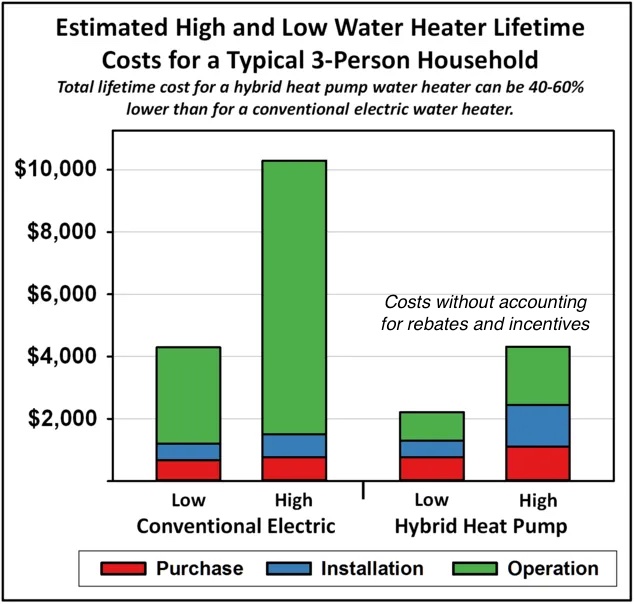
While heat pump water heaters typically cost slightly more upfront than conventional electric, that is easily covered by two things:
- Energy efficiency: HPWHs are about 3x more efficient than conventional electric, saving a typical household about $250 of electricity each year
- Incentive programs: the federal government offers a tax credit of 30% of the cost to purchase & install your new water heater. Many states and utilities offer additional programs, often paying about $500.
Without incentives, a heat pump’s efficiency makes it ROI positive in less than 3 years. With your utility and the federal government covering about half the bill, they are ROI positive on day 1.
Market Penetration
If HPWHs are so clearly more efficient, why are they only used in 1% of homes, while electric resistance water heating is used in about 45%?
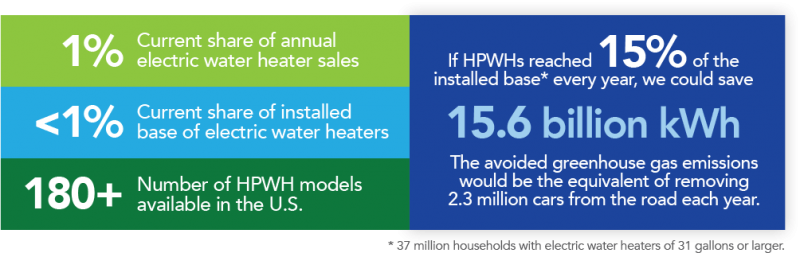
In short – there is no good reason. The largest issue at the moment is a lack of education in the market – people don’t know how beneficial upgrading to a HPWH can be, or how strong the current incentives covering the upfront costs are.
Conclusion
Upgrading to a heat pump water heater is a no-brainer decision for people looking to save money on their energy bills while also reducing their environmental impact. If you’re looking for simple ways to reduce your carbon footprint and save money on electricity, this is the perfect place to start.